Showing posts with label Historical. Show all posts

Tuesday, March 20, 2018

Telling The Story Of The Great Unknown Martyrs with Giveaway


Walt Massell | @ICFWriters

Today we welcome Walt Mussell to our blog today. Walt will be joining us again tomorrow and is giving away one ecopy of his book.


When I started writing Christian fiction set in medieval Japan, I knew I would learn much about Christianity’s early efforts there.
What I did not expect, was that knowledge would compel me to do.


Japanese history has what is called a Christian Century, roughly 1549-1650. In 1549, a team of six missionaries, led by Father Francis Xavier, landed at Kagoshima, Japan, and begin the spreading the faith. Within 65 years, the Christian population surpassed 300,000, making it the jewel of missionary efforts in the Far East. However, in 1614, the ruling government, the Tokugawa Shogunate, began driving the religion out of the country. Missionaries were ordered to leave and those that stayed risked death. Over the next few decades, tens of thousands of Christians would be killed. The Jewel of the Far East was now as forbidden as the Garden of Eden.

And one of the worst part about all of this is that so few people today have ever heard of these Christians. A former pastor of mine put it best when he referred to these people as The Great Unknown Martyrs.


It was this history that led me to create a presentation that I now give at churches. I call my presentation, “The Path to Silence: Japan’s Christian Century and Beyond.” The title is based on the book Silence by Japanese novelist Shusaku Endo. The book’s setting is the 1640s, at the end of Japan’s Christian Century. Silence is the story of two young priests who journey to Japan to find their mentor, a priest who’d reportedly committed apostasy. In the end, one of the two priests dies for his faith. The other priest apostatizes to save the lives of local Christians. It’s an excellent representation of what happened in the time period.


The presentation runs roughly 90 minutes. Within a few weeks, I will be doing a 30-minute version for the Atlanta Archbishop’s office for a Lunch-n-Learn. I hope that people will want to invite me to their churches to do the full presentation.

And it’s this presentation that I think has changed me. Of all the things I thought about when I started writing, I never imagined giving speeches. I never imagined being a guest on national (U.S.) radio show as a subject-matter expert on Japanese martyrs. In one way, it’s like I came up with my own ministry.

But then I know it really wasn’t my own doing. 😊

My question today is this: Is there a way you feel you are being called?

Please comment below for a chance to win an e-copy of my book, The Samurai’s Heart. Check back March 28th to see if you are the winner.

Walt Mussell lives in an Atlanta-area suburb with his wife and their two boys. He primarily writes historicals, with a focus on Japan, an interest he gained during the four years he lived there. He refers to his work as “Like Shogun, but the heroine survives.”
Walt is a 2017 Kindle Scout winner, which led to the contract for his first novel, The Samurai's Heart. E-copies can be downloaded from any Amazon website. Print copies can be ordered at your local bookstore. Please visit his website at waltmussell.com to subscribe to his newsletter.

Monday, February 13, 2012

Creating My Grandfather: a Guest Post by Tom Blubaugh

My grandfather died of Lou Gehrig’s disease in 1941, in the same hospital where I was born in 1942. I have always regretted being deprived of knowing him. When I was a child, I spent a week each summer at my grandmother's house. Above the television, hanging on the gold wallpaper, were two oval, mahogany frames protecting two beautiful pictures. The picture on the right displayed a lovely young woman with long, wavy, jet-black hair—my grandmother. The picture on the left was my grandfather, a man with a soft, pleasant round face, a receding hairline, and a partial smile.

My grandmother never talked about my grandfather that I recall. As I grew older, I learned a few things about him, but nothing that really told me who he was. I never understood this. Perhaps it was because I never asked questions in spite of my interest. I’ve always been aware of the emptiness of not having a grandfather. My grandmother passed away when I was sixteen. Little did I know that any hope of discovering substantive information about my grandfather died with her.

As I grew older, I would ask my mother and her siblings about him, but no one seemed to know much about his past, and what they did remember conflicted with each other’s memories. Together my grandparents spoke nine languages. They wanted their children to be Americans; so when they spoke of the old countries, they spoke in a language their children didn't understand. She was from Poland, and he was from Russia.

None of their sons had children, therefore, my grandfather's name did not continue. He seemed like a ghost. All of their children, three sons and three daughters, have passed away except my Aunt Sarah. After my mother passed away, I sat down with my aunt and asked her every question I could think of, gleaning every detail I could. I then began to research the history of the time of my grandparent’s immigration to the United States. I found pieces of information that made the bits of truth I had already learned make sense. He had been a Russian Cossack soldier in the Ukraine, immigrating to America in 1910.

Writing this story has pushed my imagination to the limit. I wonder what my life might be like had my grandparents not come to America. Would my grandmother have been a victim of Hitler’s furnaces like the majority of her family? Would my grandparents still have met and married? Would I be a Polish or Ukrainian citizen—or an immigrant? Let me introduce you to my grandfather as I imagine him.

What I have just shared with you is the introduction to my historical fiction Night of the Cossack, which was released by Bound by Faith Publishers in April 2011. I started writing this story for myself because I deeply wanted a grandfather—my dad’s father died before I was born as well.

As the story began to take shape, I found I was writing it for my heirs. I wanted them to have a heritage, too.

Sometime during the process, I shared it with a published writer on a Yahoo writers group. She said I was on to something so I joined a local critique group. They agreed and encouraged me to pursue publication. Before I had finished the manuscript, a friend and his wife asked me to help them set up a website. They were starting a publishing company. In the process, they discovered the first chapter of my novel on my own site and asked to read the manuscript. When they finished, they asked me if they could publish the book.

Now I speak to young adults in schools, homeschool groups, and clubs. I encourage them to find out all they can about their ancestors before it is too late, but I have found that their parents take an interest as well.

After researching and studying the history of the Jews in the late 19th and early 20th centuries, I understand the fear my grandparents lived with and suppressed. They were terrified that Hitler was going to make it to America. They wanted their children to be Americans. I know they didn’t realize they were robbing their heirs of our heritage.

My novel is a great story for any age although I wrote it for the YA genre. I have received letters from readers age twelve to eighty-six expressing appreciation of my novel. Another author, who is a retired schoolteacher, reviewed my book and then wrote a ten-day study guide so homeschoolers, families, and book clubs could get the most from my story. I am humbled and grateful for this, but the greatest blessing is the closure I have received and, although he is mostly fiction, I have a grandfather.


Tom Blubaugh is a freelance writer living in Southwest Missouri with Barbara, his wife. They have six children and fourteen grandchildren. Tom has written nonfiction most of his adult life, but has recently written a historical fiction titled Night of the Cossack, published by Bound by Faith Publishers. This is Tom’s first novel. He co-wrote a devotional journal in 2009 for Barbour Publishing titled The Great Adventure. His other writings include articles for a denominational magazine and an insurance publication. He also self-published a book, Behind the Scenes of the Bus Ministry in 1974.

Tom started writing poetry at the age of fourteen. His vision of turning them into lyrics for rock and roll songs for popular artists didn’t develop. He considers writing to be a God-given talent and feels led to develop it. His first novel was published when he was 69. Tom says it’s never too late. He is now writing a sequel.

Tom spent twelve years as an insurance agent and eleven years as a financial planner. He is the past president of Jericho Commission, Inc., and still serves on the board of directors.

Interested in reading Night of the Cossack? Tom is offering one reader a copy, anywhere on Planet Earth. If the winner has an American address, he will send a paper book. If the winner lives elsewhere, he offers a .pdf copy.

If you'd like to put your name in the hat, please add your email address with your comment before Thursday, February 23, replacing @ with (at) and .com with (dot) com.

"Void where prohibited; the odds of winning depend on the number of entrants. Entering the giveaway is considered a confirmation of eligibility on behalf of the enterer in accord with these rules and any pertaining local/federal/international laws."


Valerie Comer's life on a small farm in western Canada provides the seed for stories of contemporary inspirational romance. Like many of her characters, Valerie and her family grow much of their own food and are active in the local food movement as well as their church. She only hopes her creations enjoy their happily ever afters as much as she does hers, shared with her husband, adult kids, and adorable granddaughter.

Her first published work, a novella, will be available in the collection Rainbow's End from Barbour Books in May 2012. Visit her website and blog to glimpse inside her world.

Wednesday, March 16, 2011

Review, Interview, and Giveaway: Love Finds You in Prince Edward Island, Canada

In 1860, 18-year-old Prince Albert Edward, son of Queen Victoria and heir to the throne, toured British North America. This royal visit included 48 hours on Prince Edward Island and required a lot of planning to run smoothly. All of that is historical fact.

From there, author Susan Page Davis brings fictional characters onstage in Peter Stark, a young steward sent ahead to Charlottetown to prepare the way for the Prince of Wales, and Molly Orland, a local farmer's daughter who gains temporary employment at Government House.

Molly is a beautiful young woman who wouldn't normally be in a servant's position, save for the family's dire need after her father broke his leg in a farm accident. Her main duty is housekeeping and this is where Peter first sees her. They're immediately interested in one another, but Peter is only on the island temporarily, and Molly is certain he's above her station in life.

But there's more to the tale. Molly's grandfather is determined to speak with Peter's employer, the Earl of Washburn, about a historical family matter. The Earl is equally determined to avoid the old man. Peter and Molly get caught in the middle when the 'family matter' comes to light, threatening the fragile trust they've begun to establish.

Love Finds You in Prince Edward Island, Canada is the first book in the series to be set outside the United States. As a Canadian, I enjoyed this glimpse into my country's history. Though the novel started out slow and with many characters to keep straight, I was soon drawn into Molly and Peter's story. When I was through reading, I contacted Susan for an interview.

VC: Congratulations on being the author of the first Love Finds You...book that takes place outside of the United States. How did you come to be chosen for this honor?

SPD: Actually, the editor asked me if I would be interested in writing a Prince Edward Island story. She and I had talked previously about me doing a Maine story, but we hadn’t settled on a town or a story line yet. Summerside Press decided to cross the border into Canada. I feel blessed that I was invited to be part of the adventure.

VC: What drew you to this particular story?

SPD: When I began researching PEI’s history, I found a couple of incidents that grabbed my attention. I presented both to Rachel, the editor, and she loved the 1860 one. The Prince of Wales’s visit to the island of course gives a connection to the name, though he wasn’t the prince for which it was named. Prince Albert Edward’s royal tour of British North America gave me a chance to showcase the pageantry and excitement of the event.

VC: Have you ever been to Prince Edward Island? How did you conduct your research?

SPD: Yes, I had the privilege of spending some time up there before writing this book. At the time, I still lived in Maine, and I drove up. I was able to visit several of the government buildings the prince visited 150 years ago and see the room where the ball was held in his honor. It was wonderful! I also got to spend some time at the archives in Charlottetown, museums, and much more. I took my two teenagers, and we stayed a week in a cottage over on the eastern side of the island near Green Gables. I’d love to visit again sometime. Crossing the 8-mile Confederation Bridge from the mainland was quite an experience. I could imagine how much more isolated the population was in the “old days,” when you had to take a ferry. This bridge only opened about 14 years ago, so it wasn’t that long ago! When I came home I brought lots of brochures and books, and I purchased more books online to help with my research about the island, Victorian times, and all the details that go into writing a historical novel.

VC: What was your favorite scene in this novel? Why?

SPD: I like the one where they are holding a levee for the prince. Molly’s grandfather goes in wearing Peter’s top hat and the jacket Peter “borrowed” from his master. Then Molly’s father puts them on and goes in wearing the same hat and jacket.

VC: Oh, I loved that one, too! According to your website, you have a book or novella coming out pretty much every month this year! How do you manage such a busy schedule?

SPD: That does look impressive, doesn’t it? It doesn’t mean I write a book every month, though (wouldn’t it be nice to be able to do that?) In January, I had a new mystery release and an anthology. The anthology is not a “new” book, though. It’s a compilation of three short books that were earlier published separately.

For April I have Love Finds You in Prince Edward Island (new book) and in May another anthology. That one contains one of my earlier books and two by other authors. In September I’ll see a novella release. This is a very short book in an anthology with those by three other authors. That collection is called Christmas at Barncastle Inn. I’ll also have a new book, Captive Trail, released that month. In October I have a long book coming. It’s a historical called The Lady’s Maid (fourth “new book” of the year) and in November another anthology (The Bride’s Prerogative will contain all three books formerly published as The Ladies’ Shooting Club series) and one new mystery, Nothing to Hide.

Total count: three anthologies, one novella, and five new releases. So, yeah, that is a lot of books. I’m very grateful to have such a strong backlist that the publishers are re-issuing them. As to my schedule, I work long days, nearly every day.

Valerie, thanks so much for having me here.

Susan Page Davis writes romantic suspense, historical romance, and mystery. She is a Maine native now living in Kentucky, and a member of the American Christian Fiction Writers. Susan homeschooled her six children, and now enjoys her grandchildren. She's always loved reading, history, genealogy, and horses, and has even taken a farrier course.

Are you interested in reading Love Finds You in Prince Edward Island, Canada? Susan Page Davis is offering one reader a copy, anywhere on Planet Earth, once the book comes out on April first. If you'd like to put your name in the hat, please add your email address with your comment before Saturday, March 19, replacing @ with (at) and .com with (dot) com.

"Void where prohibited; the odds of winning depend on the number of entrants. Entering the giveaway is considered a confirmation of eligibility on behalf of the enterer in accord with these rules and any pertaining local/federal/international laws."

I received a digital copy of this novel for the purposes of review, though opinions are mine alone.

Valerie Comer's life on a small farm in western Canada provides the seed for stories of contemporary inspirational romance. Like many of her characters, Valerie and her family grow much of their own food and are active in the local foods movement as well as their church. She only hopes her creations enjoy their happily ever afters as much as she does hers, shared with her husband, adult kids, and adorable granddaughter.

She is represented by Joyce Hart of Hartline Literary Agency and has recently sold her first work, a novella, to Barbour Books. Visit her website and blog to glimpse inside her little green world.

Tuesday, February 1, 2011

RESEARCH, RESEARCH--By Christine Lindsay

Being a history buff, I loved researching SHADOWED IN SILK. But after writing 2 historical novels, and currently on my 3rd, I sometimes despair. The world is full of couch history experts like me, not to mention the real experts.

Like every writer, I’m prepared for when my book comes out, and hoping a reader won't stop mid-sentence to say, “Hey, wait a minute, that detail's wrong.”

My daughter, the real history major, gave me this advice. When writing a university paper, a student must use at least 2 primary sources-–meaning first person experiences, in other words, autobiographies and such. If primary sources aren’t available, get as many different versions of that particular person or angle in your story as you can.

She also said to be wary of on-line resources. Websites are great to stimulate ideas, and to find where you can get those first-person accounts. Just be careful to back any on-line research with other sources.

But for the best research, I find the good old library is best.

The hero of my story is a major in the British Cavalry during England’s rule over India. To understand the myriad of details that went into the life of that kind of officer, I read the autobiographies and biographies of military personnel from that era.

From those firsthand experiences I discovered specifics like the galvanized bathtub my Major Geoff Richards would bathe in---what his uniform was like, his tent when he was away on maneuvers, and one of my favorite details, what it ‘feels’ like to sit on a cavalry charger as it jumps over irrigation canals in Northern India.

My heroine, Abby, was researched by reading autobiographies of famous British women in India, as well the experiences of lowly female missionaries. Details such as how they sailed to the subcontinent, the calf-length skirts they wore in the year 1919, the vinolia soap they used, how they ran a home. I even read British Raj cookbooks written by English women.

How else would I have learned a favorite of British children growing up in India was a chappati spread with marmalade?

And I poured over the autobiography of that famous author MM Kaye as she grew up in India, and who later went on to write the epic Far Pavilions. However, the 3 years it took to write my own India novel, I stayed away from reading MM Kaye’s fictional works that were set there. I didn’t want to unconsciously pick up on her style or wording in any way.

I lost count of all the books I read. My guess is somewhere around 30. But there were books on Indian women’s lives, Indian weddings, Indian flora, cooking . . . the various religions there, as well as the history of Christianity in India . . . the political climate through reading biographies of Gandhi, Nehru and other politicians.

But after all was researched and my story written I wanted to make sure.

A friend who’d lived in India and Pakistan read the novel with the intent of finding mistakes. And still wanting to be sure, I found Dr. Shirley Hereford, a charming Indian woman with a PhD who teaches literature at an all-girls Indian university in India.

Perhaps I did too much research, as a non-published author at the time with no deadline. After reading my story, Dr. Shirley said that she was astounded I’d never been to her country. I seemed to know the place so well. But then . . . I had been there, through the eyes of others.

Since completing the writing of my book I have travelled to that colorful and mysterious place. When I came home from India last January, I added one or two fresh impressions to the story, but not as much as one would think.

It had been the research that made the place and time of my story come alive for me.

Drop by my website www.Christinelindsay.com if you'd like to find out more about why India means so much to me, and to follow the journey of my debut novel SHADOWED IN SILK, winner of the 2009 ACFW Genesis award for historical under the title of UNVEILED.

Tuesday, August 17, 2010

Introducing David Ferreira - Book Give Away


Hi!

Shirley Corder saying hello from South Africa.

Today I'm delighted to introduce to you South African author,
David J. Ferreira.


David was born in Pretoria, the Jacaranda City of South Africa, in 1983.


He studied at the University of South Africa, and has been writing fiction for some years. His first historical novel, David: The Warrior King, was published last year by Bridge-Logos.


Shirl: Hi, David! Welcome to the International Christian Fiction Writers blog.

David: Hi Shirley, thanks for taking the time to do this interview.

Shirl: The first thing I noticed when I met you was how young you are to be a published novelist. So let me start right away by asking, “When did you start writing?”

David: Well, I can’t really recall when I first started writing fiction. The first recollection I have was in the third grade. I had written a short story of a wolf-man, and the teacher was so impressed she spent the entire morning reading it to the class. Since then, I’ve been hooked. I wrote several unfinished books throughout high school, but it was only after matric that I decided I wanted to become a published author.

Shirl: So is David: The Warrior King your first published book?

David: Yes. I was blessed with a great agent/editor here in South Africa, the late Frances Bond. She worked with me on completing the book, and getting it ready for submission.

Shirl: Let’s get onto King David. What prompted you to write his story? Why him?

David: Well, I knew I had to start a new novel, though I didn’t know what about, so I kept praying for guidance. One day, I found this beautiful 1950’s study Bible which someone had thrown away (tisk, tisk).

As I flipped it open, I read a passage from Samuel, and it read like a novel. I don’t know why that time was different from previous readings, but I immediately knew I was going to write about David. His life was so contradictory, so inspiring and full of lessons, that I knew it would make for a great novel and would bring people closer to God. I’ve always prayed that my writing would bring people back to the Bible, to rediscover the wonderful history and teachings therein and seek the face of God.

Shirl: I always knew David to be a colourful character, but there are many gaps in his story in Scripture. You have filled these out admirably in your novel. You must have had to do a lot of research. How did you tackle this?

David: At the time, I was studying at UNISA, and they had the largest library in the Southern Hemisphere.

I spent about six months doing only research. So much so, that Frances told me that I would at one point have to stop doing research and start writing. Of course, the internet was also a great source of information.

I read numerous text books, university theses, graduate papers, Jewish translations of the Talmud and other texts. I read other fiction based on King David, to see how the authors treated the characters.

Then I went into archeology, and learned everything I possibly could about ancient Israel, their wars, military strategies, cultures and people. Even the little details were important, such as the food, typography, fauna and flora, climates, music and clothes. And with all this in my head and well referenced notes, I began writing the book, being careful that I didn’t overwhelm the reader with too much info.

Shirl: Well all your work paid off. I've read and enjoyed your novel. I feel I know the character of King David much better. Have you always been interested in history as a subject?

David:Yes,  I’ve always loved history—especially ancient times. I think I was hooked when I watched my first historical film, Braveheart, by Mel Gibson. I’ve considered writing in other genres and have written one or two short-stories and enjoyed it.

Shirl: One of the interesting things that struck me is that although women will enjoy this book, it is mainly a man’s book. Even the cover is one that will appeal to men. Was that your intention?

David: Honestly, I don’t think I had men or women in mind. I just wanted to get the story told. However, I think because I mostly read books written by men, and because of David’s life as a warrior king, the book does appear to be more of a men's book. Also, back then, I hadn’t realized that Christian Fiction has predominantly female readers.In hindsight, it might have served me well to have done some research into my market. (That is why my other books are more geared towards women).

Still, I hope I struck a balance so that both men and women will enjoy the book. I smile when I think back how often I prayed that God would send an angel who had been in David’s court 3,000 years ago, to whisper into my ear how things had really happened and what I needed to write that wasn’t in the Bible or yet discovered in archeology. Funny, huh?

Shirl: That certainly gives a different slant to the term, "an inside scoop".

David, getting a book accepted by a publisher is never easy. But when you live in South Africa and aim at being published in the States, it is a huge challenge. I know this only too well. Were you ever tempted to give up in your task of finding a U.S. publisher?

David: Oh yes! As dogged as I was in my efforts to get published, I’m reminded of a crucial time in my life. I was a waiter (which gave me enough time to write, and still pay the bills). I hated my job. I was tired. And the rejections were just too many. It felt as if I was being buried under it all.

One day, I poured out my heart to God. I said something along the lines of, “If all of the submissions I have made come back unaccepted, then I am quitting on my dream.” Then one night, I had this urge to get out of bed and make a bunch of submissions on the Internet, and I just went with it. A few days later, the acquisitions editor of Bridge-Logos responded to my proposal, saying they loved the book, and that it was just what they’ve been waiting for.

Shirl: You told me you'd sent out twenty proposals at the same time. Was Bridge-Logos the only positive response?

David: I received two offers for the book, and I was stuck with indecision. I really searched God for an answer. After a week of almost continuous prayer, I decided to go with BL.

Shirl: That must have been a tough decision. I understand it’s selling well here in South Africa? That’s exciting. Is it selling well in America too?

David: Yes, the S.A. publicist was surprised when she checked the sales numbers recently. She said the book is selling far beyond what was expected for a first-time author. I’ve received also messages about the book from people in Australia, Scotland, England, Israel, Russia, Canada and the U.S. That is probably one of the best things for a writer: to discover that your writing has contributed, if only a little, to the lives of people across the globe.

To answer your question, I’ve not enquired about sales in the US, and have not yet received up to date statistics. I suppose I’m too scared to find out, if that makes any sense.

Shirl: I can understand that. So where can readers buy this book?

David: As far as I know, it’s available at most book stores in the States. Here in SA, it’s available at CUM, Exclusive Books and Gospel Direct. You can also get it online at Amazon.com, Barnes and Noble, ChristianBook.com, Berean and several others. I have a longer list of stores on my website.

Shirl: That's great. So what are you working on now?

David: Well, after finishing two other manuscripts, the Lord released a non-profit organization to me—the Readers Society of South Africa. The company teaches kids in rural areas to read. We've also been working on getting S.A. authors some exposure, writing and publishing education and more. We will soon be launching our free book review service, which will deliver reviews of the latest books via email every Friday. There will be author interviews, sample chapters, discounts on reviewed books, and giveaways.

Shirl: That's fantastic David. One last question. Do you have any words of encouragement for the many international writers who will be reading this post?

David: Oh my. Hold on to your calling! Believe in yourself, despite the rejections. Hold on to the fact that God has blessed you with the task of writing for His Kingdom. It isn't an easy road to walk, but then, I suppose it’s not something we choose to do. As writers, we must write!.It is something God has put in us. So all I can say is: Write—and allow the Holy Spirit to lead you and open doors.

Shirl: Thank you David for an interesting conversation. May the Lord continue to bless you as you write for His Kingdom.

GIVEAWAY: Anyone who comments on today’s post will be entered for a drawing to win a signed copy of David the Warrior King. The winners will be announced in the Sunday Edition on 29th August and the book mailed to the winner. Please leave an email address where you can be reached.

Void where prohibited; the odds of winning depend on the number of entrants. Entering the giveaway is considered a confirmation of eligibility on behalf of the enterer in accord with these rules and any pertaining local/federal/international laws.

SHIRLEY M. CORDER lives near the seaside in the beautiful "Windy City" of Port Elizabeth, in South Africa. She is an RN, a pastor’s wife, cancer survivor and freelance writer. Well over 200 of Shirley’s inspirational and life-enrichment articles have been published around the world. You can contact Shirley through her writing website, her cancer inspirational website, or you can follow her on Twitter or Facebook.

Monday, June 14, 2010

Jennifer Hudson Taylor's HIGHLAND BLESSING--By Christine Lindsay

A REVIEW OF HIGHLAND BLESSING--By Christine Lindsay

To win a copy of this fresh and lively historical romance, please leave a comment below. On Sunday, June 20, I will draw names from that list of commentors. Don't forget to leave your email address spelled out so I can contact you. The author will then send you a free copy. Now, for my thoughts on.....


Highland Blessings is a fresh, gently-romantic, intelligent read set in ancient Scotland.

Akira MacKenzie and Bryce MacPhearson are caught between their two opposing families. To bring peace, Bryce vows to his dying father that his father’s heir, Evan, will marry the MacKenzie’s daughter, Akira.

Bryce kidnaps Akira on her wedding day and whisks her away to the MacPhearson castle. But vengeance follows close on their heels and a member of Akira’s family murders Evan, Bryce’s elder brother. To keep his promise to his father, it now falls to Bryce to marry Akira. But can a marriage begun on mistrust and the hatred of generations succeed?

The young couple contends with the difficulties of being married to someone they’re not sure will ever truly care for them. They live under the constant threat of the two families rearing up in war. And, as love begins to flower, the awareness grows that there is a traitor in their midst who will commit murder to keep the clans apart.

I love it when an author knows their historical setting. This is true of Jennifer Hudson Taylor. This author breathes the Scotland of warring clans, castle ramparts, claymores and swordplay. Yet she weaves her vast knowledge of the history into a fast-paced story in such natural ways you are transported to that era. You can hear the rolling r’s within the dialogue, and smell the Scottish pines and heather. You can feel the soft highland mist against your skin.

I highly recommend this book. For several nights I tucked myself into bed with it. This story unfolds with easy to follow twists and turns. And if you like a gentle love story, and an inspirational read in a book that isn’t going to jar you with unpleasant images, and about 300 pages, then this is one you’ll enjoy.

If you would like to buy a copy, click here on Jennifer Hudson Taylor and find out how. But someone can win a free copy, by leaving a comment below. Blessings.

This review was written by Christine Lindsay. If you would like to read more by me, check out my blogsite www.christinelindsay.com. I've written on Adoption and Reunion, am currently writing the non-fictional story of Children's Camps International, and at the same time I'm writing my third historial fictional. Thank you for dropping by.

Monday, April 19, 2010

How Much is Too Much?

Good Monday morning. Alice Valdal here with a burning question for readers everywhere.


Can you have too much detail in a story?

Too much setting?

Too much historical fact?


The answer, of course, is yes.


In my WIP, an historical that takes place over three years, I've used newspaper snippets at the top of each chapter to show a flavour of the era and the passage of time. My first reader just flagged all of them as boring. Ouch! As a history buff, Ifind them extremely interesting. So, what do readers want? Is the price of wheat in 1903 interesting to you? It is a prairie tale


At my book club this week, there were complaints that an author had used no description of various characters. In fact, the novel in question had several female characters and we couldn't keep them straight. They seemed like mere names on the page. Now, to make a character truly come alive, we need to know about her dreams and fears and goals and motivation and conflict, but many of the readers at that meeting wanted some description of what the character looked like, too.


So, as authors who write from a variety of locales, do we fill our books with local colour? I just read a set of guidelines that stipulated the publisher wanted a mini-travelogue in each romance story. Yet others have complained that too much attention to the type of architecture or the natural flora detracts from the story.


Personally, I like to feel the heat and dust if I'm reading about Africa or the Outback of Australia. I want the crisp, clear air of the Rocky Mountains, or the salt tang of a Nova Scotia seaport.

Details, details. How much is too much?


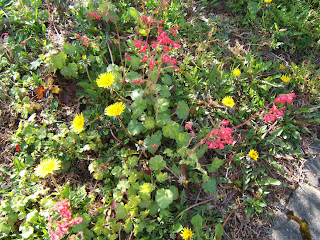
I conceived the notion for this article while weeding in my garden. Do you appreciate this photo of Coral Bells more or less for knowing my struggle with the dandelions?


Do you want to know if my heroine has blue eyes? Do you care who was King in 1910?


For more details about me, check out my webpage at http://www.alicevaldal.com/


Monday, January 18, 2010

Meet Kay Marshall Strom-Book Giveaway!


LISA HARRIS: Today I’d like to welcome Kay Marshall Strom! With an upcoming release of my own set in Africa that deals with modern-day slavery issues, I am particularly interested in Kay’s book that deals with slavery in the historic setting of West Africa.

Welcome Kay. Tell us a little about yourself.

KAY: I am a writer/speaker/wife/mom/traveler/shaker-up of comfortable thinking. Topics that challenge us to think globally and outside safe parameters especially attract me. I am a Christian who is more interested in what Jesus and the Bible truly teach than in what the loud talkers among us tell us we should think. It used to be that I thought my voice was limited to writing non-fiction—which I do enjoy, by the way—but to my great joy I’ve discovered that fiction can be an amazing way to communicate. Thank you, Grace Winslow (my main character in The Call of Zulina) for teaching me this great lesson!

LISA: How long have you been writing, and how many books do you have published?

KAY: I’ve been writing my entire life, but I really began to look toward publication about twenty-five years ago. I have 36 published books.


LISA: I’m particularly interested in your story, as I used to live in West Africa. Tell me about the book you’re featuring today and especially its international setting.

KAY: The Call of Zulina is Book 1 of a three-book saga. Set in West Africa, it centers around Grace Winslow, daughter of a British slave ship captain father and an African mother. Trapped in a marriage arrangement with a pompous, disgusting white slave trader, she flees her home and ends up in the middle of a slave revolt at Zulina slave fortress. It is there that she comes to understand the horrific nature of her family’s involvement in the slave trade. Grace is forced to choose a side—slave or slaver—and to live with the consequences of her choice.

LISA: What made you want to write this story/your connection to this setting?

KAY: While I was in Senegal, West Africa, working on Once Blind: The Life of John Newton, I toured an old slave fortress and was struck dumb by a set of baby-sized manacles bolted to the wall. Shortly afterward, while researching John Newton, the author of “Amazing Grace”—a slaver turned pastor/abolitionist—I read about an English slave trader and his African wife who ran a slave business. I couldn’t help but wonder: “If they’d had a daughter, who would she be—English or African? Where would her loyalties lie?” That was the birth of this story. Grace is that daughter with one foot in each world, but who belongs in neither.

LISA: What research did you have to do for this book?

KAY: Because so many factors and players came together to make the African slave trade so horrific, I needed to do research from many different points of view—colonial, African, financial, industrial. (It was shockingly astounding to hear the righteous indignation with which white traders fought back against those who challenged them, for instance.) My research included personal trips to the “slave coast” of Africa and a subsequent trip to the Goree Island slave fortress, as well as a wide variety of reading and interviews.

LISA: What was your favorite part of writing this book?

KAY: Discovering the strength of Grace Winslow! I saw this strength and endurance exemplified by women I met in Africa—especially those in Sudan. As I read the stories of men and women ripped away from their homes and lives and forced to endure such dehumanizing circumstances, I pictured the women I met in Sudan.

LISA: The hardest?

KAY: The hardest part by far was coming to understand the searing depths of the African slave trade degradation.

LISA: This is a horrid reality that continues to this day. What are you working on now or going to write next?

KAY: The Call of Zulina is just the first book in the Grace in Africa trilogy. Book 2, The Voyage of Promise, is on the editor’s desk and scheduled for release next fall (2010), but I’m still finishing Book 3, The Triumph of Grace (due for release spring 2011). After that I will be starting another international trilogy: Blessings in India. This will follow the course of two Indian families through three generations: One—privileged, high-caste landowners—pride themselves on being descendants of first-century converts to Christianity, yet they cling to the Hindu beliefs of karma and caste subjugation. The other family, the Blessings, are despised untouchables who struggle to eke out a subsistence survival in the garbage heaps on the fringes of Indian society. The first book of this trilogy is due for release in September 2011.

LISA: What are you currently reading?

KAY: I just finished Wild Swans: Three Daughters of China by Jung Chang. It’s a real-life saga of a Chinese family that endured three generations of violence and heartbreaking tragedy in the name of a country’s progress.

LISA: Tell us something fun about yourself that readers may not know.

KAY: One of my side proclivities is speaking on cruise ships in exchange for fun cruises for my husband and me. There is no end to the places I want to go and the things I want to see!

Now that’s a job I need to have, Kay. ☺ Thanks so much for being a part of our blog. I’m really looking forward to reading Graces’s story.

Kay has graciously offered to give away a copy of The Call of Zulina. This contest is open to any address worldwide, so leave a comment below with a way to contact you. I will draw a winner on January 30th!

To read more about Kay and her writing, please visit her website!