Showing posts with label Old West. Show all posts

Thursday, December 20, 2012

The Historical Canadian West (and Giveaway!)

Remember back in September when I posted about our visit to Canada's Bar U Ranch in The Last Best West? I was tickled pink to find that author Linda Ford's new series for Love Inspired Historical is spun off of that very ranch and the era it represents.

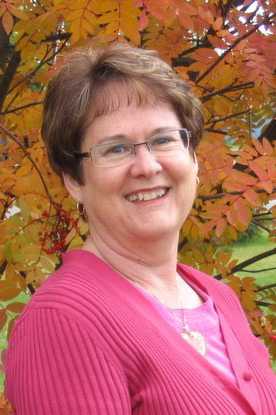
Linda lives on a ranch in Alberta, Canada. Growing up on the prairie and learning to notice the small details it hides gave her an appreciation for watching God at work in His creation. Her upbringing also included being taught to trust God in everything and through everything—a theme that resonates in her stories. She and her husband raised fourteen children—ten adopted. She currently shares her home with her husband, a grown son and a live-in paraplegic client.

Please welcome Linda Ford!

Hi! Thanks to Val for inviting me to visit. My name is Linda Ford. I live in Alberta, Canada. I write for Love Inspired Historicals and am currently working on a series called THE COWBOYS OF EDEN VALLEY.

Not far from where I live is a beautiful, scenic highway called The Cowboy Trail.

The highway runs between the prairie and the Rocky Mountains. Here early ranchers ran cattle herds in the thousands over huge sections of land grants. Today you can still see cattle grazing the lush grass, cowboys on horseback but rather than chuckwagons, you are more likely to see a motorhome. But what you can see unchanged since those early ranching days is the rolling hills and the majestic mountains. And tucked into the valleys and between the hills, are ranch buildings, some dating back to the 19th century.


The scenery moves me, fills me with wonder and amazement. The historic ranches fire up my imagination.


I am grateful that some of the land owners have seen fit to preserve the history of their ranches. The Bar U Ranch is now a national historic site and well worth a visit or two or three or a dozen.

I never mind another visit in the name of research. This ranch has become the fictional setting for my series THE COWBOYS OF EDEN VALLEY. There is a wealth of information for the historical author. The buildings are restored to original use and well maintained.


From the first time I drove this highway and visited the Bar U, I have wanted to set a series of stories here. I wanted to portray the men and women who faced the challenges of living in a raw new land before settlements sprang up, even before the railroad came. At the time of the earliest ranches, goods and supplies came from Fort Benton by bull train.

There was law in the land with the formation of the Northwest Mounted Police a few years previous to the beginning of most ranchers. Although the outposts were few and far between, the Mounties had the reputations of upholding law and justice. Some of the early ranches became home to the NWMP outpost.


But what really touches my heart is the stories. A wanted outlaw who turned rancher and died in relative obscurity. A dandy from England who persevered through his greenhorn period and went on to become a successful rancher. The big black cowboy who was never thrown yet died when his horse stepped into a badger hole and fell on him. The lady ranchers who faced hardships and prejudice to succeed. And natives who worked side by side with the white man to make their mark in history. I love the stories. I ponder on how to make them my own.


My COWBOYS OF EDEN VALLEY series began in Oct. with a Christmas novella, "Merry Christmas, Cowboy" in the book A Gift of Family. It continues with The Cowboy's Surprise Bride in Jan. 2013.

In March 2013, The Cowboy's Unexpected Family is released. In May 2013 The Cowboy's Convenient Proposal is out. There are 3 more upcoming books in the series—titles and release dates to be announced.

I thought I’d share the first teaser for the January book in the hopes it will entice you to buy the book and read it. J

From The Cowboy's Surprise Bride.

“While you are here, I expect you to conduct yourself wisely and in a ladylike fashion.”

Her nostrils flared. “You mean play the lady of the manor.”

Behind her, Cassie snorted.

She’d no doubt been raised as such. Why didn’t she offer to be so here? Not that it made any difference. He wasn’t about to toss Margaret aside over a misunderstanding. Softly, he asked, “What do you see your role here?”

She ducked her head so he was unable to see her expression. “I suppose I thought you meant to marry me.” She lifted her head and faced him with her eyes flashing courage and challenge. “I will make a good pioneer wife.”

“I never got your letter or I could have warned you I’m not desperate for a wife. Besides you can’t simply substitute one woman for another as if they are nothing more than horses.”

“Why not? Are you madly in love with Margaret?”

Love? There was no such thing as love in an arrangement like theirs. “We suited each other.”

“She doesn’t seem to share your view of suitability.”

You can find out more about me and the upcoming releases on my website www.lindaford.org. It’s been fun visiting.

Thanks so much, Linda! And that's not all, folks!

Interested in reading The Cowboy's Surprise Bride? Linda is offering one reader a copy, your choice of digital or paperback, anywhere on Planet Earth. If you'd like to put your name in the hat, please add your email address with your comment before Thursday, December 27, replacing @ with (at) and .com with (dot) com.

"Void where prohibited; the odds of winning depend on the number of entrants. Entering the giveaway is considered a confirmation of eligibility on behalf of the enterer in accord with these rules and any pertaining local/federal/international laws."

Valerie Comer's life on a small farm in western Canada provides the seed for stories of contemporary inspirational romance. Like many of her characters, Valerie and her family grow much of their own food and are active in the local food movement as well as their church. She only hopes her creations enjoy their happily ever afters as much as she does hers, shared with her husband, adult kids, and adorable granddaughters.

Her first published work, a novella, was released in the collection Rainbow's End from Barbour Books in May 2012. Visit her website and blog to glimpse inside her world.


Thursday, September 20, 2012

The Last Best West

Ask any editor what the sweet spot is for historical novels, and most will tell you the 1880s in the American West. But the United States isn't the only country with a history of western expansion in that decade. Just north of the 49th parallel, similar events were happening in Canada.

My husband and I visited the Bar U Ranch a few weeks ago. This Canadian Historic Site is nestled in the foothills of the Rocky Mountains about an hour southwest of Calgary, Alberta. It's one of a group of sites owned by Parks Canada, set aside as working monuments of a bygone era to keep history alive. The Bar U is the only one of these sites dedicated to Canadian ranching history.


I could tell you of the history of the place, but much of it can be found here if you're interested.

A few key points stand out:
* Cattle from the Bar U Ranch were shipped as far as Chicago, Montreal, and England.

* Two of the owners of the ranch were instrumental in underwriting the Calgary Stampede, a rodeo of world renown, in 1912.

* Starting with 3 Percheron studs and 75 mares from France, Bar U horses won almost every event they entered in the World's Fair in Seattle in 1909. This herd became very important when France's breeding stock was wiped out during World War I. France bought breeding stock from the Bar U, meaning that virtually all of the world's Percherons are now from the Bar U bloodlines.

* Edward Prince of Wales visited in 1919 and was so impressed with the Alberta ranchlands and the cowboys of the Bar U that he bought his own ranch, the E.P., next door.

At the National Historic Site, we were treated to a wagon ride among the ranch buildings behind a Percheron team.


We explored inside nearly every building on the ranch from the blacksmith and harness shops to the cookhouse and the barns. Very few places are off limits to visitors.


Half a dozen or more park employees were on hand in various parts of the ranch to explain life from 1882-1942, the era the historic site represents. All were willing to answer questions and chat about the history of western Canada and how it helped shape the world of its time. We visited with the leatherworker for a time. He'd just completed a guitar strap. One thing led to another until he invited my husband to pick up the guitar in the corner and play for a while. When other visitors went on their way, he serenaded us with a couple of songs he'd written.


Round-up Camp provided visitors with 'cowboy coffee' and fresh bannock, cooked over a fire while we watched, and served with handmade Bar U butter and jam. The campfire cook gave us more details about chuckwagons and home on the range while we enjoyed these treats.


Back in the day, the Bar U provided all the food needed for its hands from its large gardens, fields, hogs, chickens, dairy herd, and beef cattle. That's a self-sufficiency lost to our modern world! They still have a large (very well kept) garden.


A day poking around a historic site can provide all kinds of fodder for stories, even for one who writes contemporary genres. My inner wheels are certainly grinding!

When's the last time YOU visited a historic site? What memories stick out for you?

Valerie Comer's life on a small farm in western Canada provides the seed for stories of contemporary inspirational romance. Like many of her characters, Valerie and her family grow much of their own food and are active in the local food movement as well as their church. She only hopes her creations enjoy their happily ever afters as much as she does hers, shared with her husband, adult kids, and adorable granddaughters.

Her first published work, a novella, was released in the collection Rainbow's End from Barbour Books in May 2012. Visit her website and blog to glimpse inside her world.

Monday, May 31, 2010

Canadian Prairies Missed the Old West

by Anita Mae Draper

I'm thrilled to be here, today. However, when Narelle first invited me to write a post, I went from elation to anxiety within hours. That plummet can only be contributed to one thing... I’m a traitor.

You see, I’ve lived my whole life in Canada. Born and raised in Ontario and Manitoba, I joined the Canadian Armed Forces (CAF) when I was 17 and married another CAF member at age 19. Our career moves took us to Alberta and then Saskatchewan where we’ve settled down.

So, why am I a traitor? Because although I live on the Canadian prairies, I write inspirational romances about the American Old West set in Wyoming and Montana.

Remember all those old TV Westerns from the ‘60s and ‘70s? My favorites were Wagon Train, Bonanza (or Ponderosa in syndication), Gun Smoke, High Chapparral, and The Virginian. It might have been my parents’ choice to tune in to those shows, but you couldn’t have pulled me away from the TV set when they were on unless you bribed me with a ride on a real horse.

Once the shows were over, I’d scurry to my room, make sure I was sitting on my half of the bed I shared with my sister, and with my scribbler on a pillow across by knees, I’d write my own stories based on the settings I’d ogled from the TV shows. I lived in Northern Ontario at the time, amid rocks, lakes and trees. Lots of trees. Maybe the American West appealed to me because of the physical wonders my eyes had never seen. I was 11 yrs old when we moved to the province of Manitoba. I still remember looking out the car window and watching the trees fade away. The open prairie welcomed me.

Or maybe it was the thrill of the lawlessness which excited me. You know, good versus evil played out in the lives of ordinary people. Whatever the reasons, those shows sparked my imagination and spurred my writing.

As a child, one of the things I missed out on was going to the local movie house because it was considered a sin. Yet, there was one long summer when my brother and I were sent to live with my dad’s mother and brothers. You want to talk about rules? There were none. All we had to do was smile and they’d give us a quarter. A chorus of Jingle Bells was good for a dollar. For the first time in our lives, we had our own bikes—and the whole town to explore. Grandma fed us whenever we got home and washed our clothes when they were dirty. Our only curfew was the town siren which went off at 9 o’clock every evening. Anyone under the age of 18 caught outside after that siren went off was promptly escorted home. I think I only missed the curfew a few times and while running down back alleys and keeping to the shadows charged my adrenaline, the threat of capture kept me inside more times than not.

And do you know what was so special about that summer? Not the money. Not the freedom. And not the thrills… It was the Saturday matinee at the local movie theatre.

To a girl born in Logging Camp #5 and used to a small TV with rabbit ears, the theatre experience almost overwhelmed me. The larger than life characters. Noises so loud I felt like I was in a vacuum for hours afterward. Feeling the room shake from the reverberations of the on-screen trains or explosions. Everything about the theatre was big. Oh, how I struggled to capture those sounds on paper.

I was introduced to movies like The Good, The Bad and The Ugly and although I didn’t have a name for it at the time, I’d stumbled upon one facet missing in my writing…tension. No matter what anyone says about those old ‘spaghetti westerns’, the time spent building an atmosphere of anticipation is a worthwhile study for any fiction writer.

With those basics, I wrote my stories. Some were set on a wagon train and some were set on the open prairie or on the rocky hills nearby, but they were all Old West locations.

Yes, I read the antics of Anne Shirley in Lucy Maud Montgomery’s Anne of Green Gables series, but they didn’t inspire me to write books like the ones about young girls and the hardships they faced on their journeys to the American West. Always The West.

So, why do I write about the American prairies and not the Canadian ones? Probably because Canada seems to have skipped the whole ‘Old West’ phase. It’s like we went from the Hudson Bay Company’s fur trapping era right to the Northwest Mounted Police (NWMP) and their Mountie ‘always gets his man’. Precursors to today’s Royal Canadian Mounted Police (RCMP), the NWMP was established in 1873. Since the setting of my current book/work in progress is 1879, I’m writing in the same time frame. So why didn’t Canada have an Old West? I really don’t know. Maybe the Mounties spoiled all the fun.

But I do have some story ideas using the Canadian West in the late 19th century. Since I’ve lived in all 3 of the Prairie provinces, I can draw on my personal wealth of information. And there’s one thing which will speed my will to write them… the knowledge that readers want to read them.

What was your favourite movie genre when you were a youngster? Is it the same now that you’re all grown up?

~~~~~~~~~~~~~~~~~~~~~~~~~~~~~~~~

Anita Mae Draper lives with her husband of 33 yrs and their 2 youngest of 4 children on a farm outside Montmartre, Saskatchewan. After a 20 yr military career, Anita Mae delights in the solitude and openness of the Canadian prairie although she and the kids often work as extras on TV and Film sets in the city of Regina, an hour away. She attends a small country church 40 km away where her husband and children are on the worship team. Non-musical (although she tries), Anita Mae’s ministry is webmistress for the church at www.glenavonchurchonthehill.com. Anita Mae invites you to visit – and befriend her – at these web sites: