Showing posts with label Melanie N. Brasher. Show all posts

Wednesday, August 1, 2012

What Makes Your Characters Unique?


I always leave a little tea in my cup. I like to say it’s just my optimism—my way of seeing every glass half full. My husband says it’s just one of my many quirks.

If you asked my husband, he would tell you several other idiosyncrasies about me. The way my voice inflection and accent changes when I speak to different people. The way I choose particular utensils for each entrée (macaroni and cheese tastes ten times better if eaten from a bowl). The way I talk with my hands when I’m particularly nervous. These peculiarities define me to some extent, or make me unique anyway. Can you relate to any of these quirks?

As I work through edits of my first novel, I’ve realized (with the help of contest judges and critique partners), that my characters need more depth or distinctiveness. In fact, one of my critique partners pointed out that all of the characters sounded the same, and as I’ve read through the work again, I’ve come to agree with this observation. I believe my characters need specific quirks and distinct voices in order to make them likable and memorable. I'm beginning to realize the strength of my plot is directly related to the strength of my characters.

In James Scott Bell’s book, Plot and Structure, he says, “…the more the reader can identify with the Lead, the greater the intensity of the plot experience…identification means, simply, that the Lead [character] is like us.” He also says, “…the stronger the characters, the better your plot.”

When I recall my favorite novels, I immediately think about the characters. What would Anne of Green Gables be without the fiery, red-headed Ann with an e? There would certainly be less conflict or plot. What if Elizabeth Bennett lacked her wit and vivacity and did everything according to convention? She would be no match for Mr. Darcy and there would be no Pride and Prejudice. Or what if Charles Dickens’ character David Copperfield lacked his peculiar gift of observation? We would never find out if he was the hero of his own story. I’m drawn to these delightful novels because of the unique characters that drive the plot, and I find their quirks endearing or likable. 

So, I’m recreating my characters these days. I’m giving them depth and dimension by adding quirks, likable traits, and distinct voices, and in so doing, I hope I can create three dimensional people who strengthen the plot and remain with readers long after the last page.

What is one of your lead character’s quirks in your current WIP? What is one of your quirks? Who is one of your favorite novel characters? How does his/her character drive the plot?

Melanie N. Brasher is a full time mama of two boys and wife to an incredible husband who understands her bicultural background. She moonlights as a fiction and freelance writer, crafting stories and articles toward justice and change. She's a member of American Christian Fiction writers and a contributing blogger for Ungrind. Though she's an aspiring author, she'll never quit her day job.

Monday, June 18, 2012

How to Find Your Writer's Voice


I like to control my words. I’m a writer after all. 

11 words
photo credit: Flickr Creative Commons

When I work on a piece, I edit and revise until it’s neat and tidy, contained and cozy. This piece is going to change the world, I think. And perhaps it touches one or two souls, but the globe spins round, mostly untouched by my creation.

Yet, I'm learning God often uses my weakest pieces for His glory. It's the sloppy, short, or less appealing ones which uplift and encourage others. For often it is the authentic, messy stories that reach the inner recesses of the soul. That connect to humanity.

When I focus on myself—on my eloquence, creative ability, or skill—my words often fall short. But when I let God speak—write—through me, He transforms and multiplies my words. For the Creator God who spoke the world into existence, breathes life into my work.

Every artist knows only the creator can speak creation, and when I allow God to write through a weak vessel, such as myself, I find my writer's voice.

Do you have a story of God using a piece or novel you thought was one of your weaker ones?


Melanie N. Brasher is a full time mama of two boys and wife to an incredible husband who understands her bicultural background. She moonlights as a fiction and freelance writer, crafting stories and articles toward justice and change. She's a member of American Christian Fiction writers and a contributing blogger for Ungrind. Though she's an aspiring author, she'll never quit her day job.

Monday, May 7, 2012

When Inspiration Knocks


I write in my sleep.

And when I awake, I think in paragraphs.

For I'm a writer, an observer of the world. Though I carve out time daily to scratch out my thoughts, inspiration knocks at the most unexpected times.

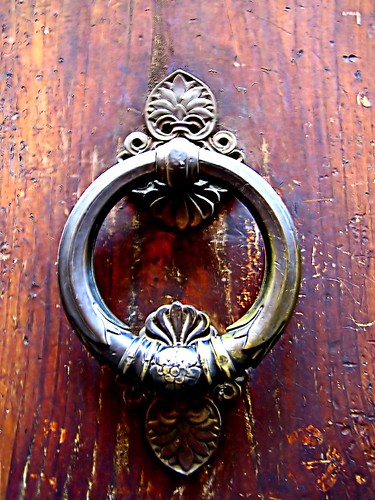
palazzo alberini knocker

I hear the rap when I'm peeling potatoes, boiling eggs, spooning mushy carrots into my baby, or telling my preschooler to eat his broccoli. At those moments, I search for bits of paper. Anything. Even a crumpled napkin will do. I must answer the door even if water spills over or the kitchen is left amiss.

Inspiration enters when I'm plucking tomatoes from my garden, folding laundry, driving to play date, or seeping tea for my hubby. And sometimes the tea never makes it to the table, because the idea speaks louder than the whistling kettle.

When I rest my head on my pillow, a light bulb illuminates my mind. I've got the answer to my protagonist's dilemma. I know if I roll over, or push the muse away, I'll lose the thought. My hero will die. So, I ransack the room for a journal. A writing instrument.

And where are the pens when I'm in dire need?

Oh, I love to bake, put meals on the table, and spend time with loved ones. And if you come over, I'll even make tea.

But, if a sliver of light falls on your cheek, forgive me if I ask you for the back of the receipt in your pocket or purse.

For I'm a scribe.

And when inspiration knocks, I'm compelled to answer.

When does inspiration knock for you? Do you answer? When do you get your best writing ideas?

*this post first appeared on Hoosier Ink, August, 2011


Melanie N. Brasher is a full time mama of two boys and wife to an incredible husband who understands her bicultural background. She moonlights as a fiction and freelance writer, crafting stories and articles toward justice and change. She's a member of American Christian Fiction writers and a contributing blogger for Ungrind & Hoosier Ink. Though she's an aspiring author, she'll never quit her day job.

Wednesday, March 21, 2012

The Seasons of Novel Writing


It’s spring in my corner of the world. 

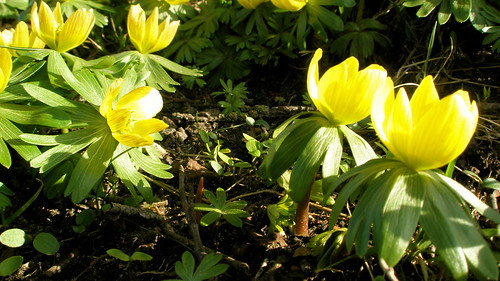
Spring blooms

Buds burst forth in greens, whites, and cherry reds. Yellow daffodils open their petals and reach for the heavens. Each morning, I wake to a chorus of birds outside my window instead of the usual rhythmic beeping, or toddler cry. And every evening, the sun lingers just a little longer.

I love this season of new life and hope. It’s a glorious time of year.

Yet, as I pen these words, I know that many of you reside in different corners of the globe, and though I’m experiencing the newness of spring, you may be feeling winter’s grip.  At this very moment, you and I walk through very different seasons.

And isn’t that how it is in our writing lives as well? From the birth of a story idea and growth of a novel, to barren times of waiting and the joy of a book contract, we writers know the ebb and flow of the seasons. 

Some of you may be walking through the season of spring along with me. You’re new to novel writing, or you’ve stumbled upon a new story idea. You’re enthralled with the newness, the potential. Yet, your story is just a seedling. It needs tender care, careful watering, plenty of sunshine. And once it’s written, it needs weeding and pruning—ruthless editing. Overall, this season is a fabulous one ripe with possibilities.

Perhaps you’re in the thick of summer. Your novel is a full-fledged story complete with flowers and fruit. It’s a masterpiece, a beautiful work of art, and you’re thrilled. You’ve spent days toiling under sweltering sun, crafting the characters, weaving the plotline, developing dialogue. Can there be a more beautiful baby?  You’re ready to show your work to a critique partner or editor. They’re just going to love it.

Maybe you’ve taken the plunge and shown your work to a faithful critique partner who tells you your story has potential but yada, yada. The returned manuscript’s sidebar is peppered with comment boxes, and that paper is baptized in red ink. It’s the first time you realize your story isn’t perfect; in fact, its flaws are now evident as a rather large pimple, and you enter a season of winter. It’s a time of reworking, rewriting, rethinking everything. An icy chill grips your heart. Doubts assail. Do I have any talents at all? Do I have what it takes to be an author? You pray, seek out a friend's encouragement, and cry for awhile. But at the end of the day, you smooth out the wrinkles in your shirt and your story.

A few of you may be in the glorious harvest of fall. After much perseverance, hard work, and support from others, you’ve made the revisions. Your story now sparkles—it’s ripe for the plucking. An agent notices your work and then a publisher. You now hold a contract in your hand, or your book is about to release. It’s a glorious time of celebration.

Yet, I imagine, that even after obtaining an agent, or receiving a contract, you may still experience all the novel writing seasons anew. You may once again taste the newness of spring, the heat of summer, the chill of winter, and the joy of fall. And I’m certain I will too.

For now, I press on in this season of spring.

What season of writing are you experiencing? What season is it in your corner of the world?

Melanie N. Brasher is a full time mama of two boys and wife to an incredible husband who understands her bicultural background. She moonlights as a fiction and freelance writer, crafting stories and articles toward justice and change. She's a member of American Christian Fiction writers and a contributing blogger for Ungrind. Though she's an aspiring author, she'll never quit her day job.

Monday, February 6, 2012

My Mistakes as a First Time Novelist

A year ago, I finished my first novel complete with first time mistakes.

EDIT>
photo credit: Matt Hampel {Flickr Creative Commons}

I didn't know my abcs about writing a good story. I simply knew writing coursed through my veins--I enjoyed stringing words together, thought in blog posts, and filled journals. Plus, daddy always told me to write a book one day, and my English professor liked my essays. And then there is the picture of me in diapers, scribbling.

So that makes me a novelist, right? Well, sort of.

Three years ago, I pulled out my notes and let my fingers fly. Without the slightest clue about market or genre, I picked an international setting with a foreign character, wrote in first person, and spanned a lifetime of events. Not to mention, I utilized every adverb and clichéd phrase known to humankind.

And aren't writers supposed to tell a story? And yes, my novel reads like soggy oatmeal about half way through. Oh, is that what you call a sagging middle? And it isn't wise to introduce too many characters or backstory at once, you say?

Clueless. You could say that.

Yet, despite my blunders, I completed the project. And though I started with the noble purpose to create a polished--somewhat perfect--piece of art, I realized, after my story grew a mind of it's own {and thew a temper tantrum}, I had a choice to make.

In her book, Bird by Bird, Anne Lamott says, "if you want to write, you get to, but you probably won't be able to get very far if you don't start trying to get over your perfectionism."

In order to finish, I had to resist my urge to cross my T's and dot my I's. I could either complete what I had started, or tuck my work away.

I opted for the former.

Oh, I wish I could tell you my first novel is Einstein genius, that it glimmers like the Taj Mahal, that publishing houses are sitting on pins and needles waiting for me to query. However, as I slog through edits, I realize the rational side of my brain is right--my story needs work {okay, it needs plastic surgery}. I may now call myself a novelist, but just as marathon runners run and singers sing, I must write. And I must not worry about getting it right the first time.

So, I must make mistakes.

It's the only way to write a better story.

###

Melanie's formula for success:
Practice. Read. Write. Fail. Cry. Pray. Practice. Laugh-out-loud at first manuscript. Say, what in the world was I thinking? Practice again. Receive rejection {with grace}. Cry. Pray. Practice...

"Your dedication to writing is a marching step forward from where you were before, when you didn't care about reaching out to the world, when you weren't hoping to contribute, when you were just standing there doing some job into which you had fallen." --Anne Lamott, Bird by Bird

Check out Alicia Rasley's article "Top Ten Plotting Problems". This is a very useful editing tool {and yes, some of these problems have sneaked into my story}.


What blunders have you made in your writing journey? What lessons have you learned?


Melanie N. Brasher is a full time mama of two boys and wife to an incredible husband who understands her bicultural background. She moonlights as a fiction and freelance writer, crafting stories and articles toward justice and change. She's a member of American Christian Fiction writers and a contributing blogger for Ungrind & Hoosier Ink. Though she's an aspiring author, she'll never quit her day job.