Showing posts with label Monastery Murders. Show all posts

Tuesday, September 26, 2017

The More Things Change, the More They Stay the Same; or Why I Write History

I have always loved history. I want to know what past times were really, how people lived, what
they did, and how it felt to be part of society in bygone days. The more I study, read and write about history, however, the more I believe that, technology and modern conveniences aside, the answer to most of those ponderings is “about like we feel.”

I am constantly amazed when I read about prejudices, conflicts and struggles in bygone times and find myself thinking, “That hasn’t changed!”

An interesting example I encountered recently was reading “What Made the News in 1809”in my favorite magazine Jane Austen’s Regency World. It seems that the English had seized 16 Dutch fishing vessels, an action that led to the government banning fishing trade with the Dutch to protect British fishing.

I then turned to reading the same week’s Economist, but had to check to be sure I’d changed magazines when I read of English trawlermen protesting European Union fishing quotas and a government leader promising to withdraw from an international fishing treaty, including with the Dutch.

The fact of how little people: their basic desires, feelings and ideas, really change has been an on-going underlying theme of my writing. All of my books, even the contemporary murder mysteries, have an important element of history as a means to understanding what is going on in the present.
In A VeryPrivate Grave, the first of my Monastery Murders, Felicity, my thoroughly modern, full-steam-ahead American heroine struggles greatly with this concept when she is thrown into close contact with Antony, her church history lecturer and they set out to solve a present-day murder with its roots deep in the past.

“History is—well, history,” she argues. “It’s past.  You can’t change it.  The future is what matters.  That we can change.”

Antony agrees to the truth of her statement, then explains, “But the past impinges on the future.  We have a better chance of controlling the future if we understand the past.”


And so I write history because I’m really writing about today—and tomorrow.

Donna Fletcher Crow is currently writing the fifth book in her Lord Danvers Investigates Victorian true-crime series, and, as always, is continually amazed at how little attitudes, desires and motives have changed. You can see these books and all of her novels of British history at www.DonnaFletcherCrow.com


Wednesday, March 15, 2017

Never Give Up

In the “never a dull moment” category of this crazy business we call the writing life, one of the worst moments is having a beloved publisher drop you, or worse yet, go out of business. I had both experiences in the middle of my Monastery Murders series— and just within a few months of each other.

Well, my mother always said, “It isn’t what happens to you, it’s how you respond to it.” And, really, in this business there’s nothing to do but to keep on keeping on. So I dusted myself off and did something I said I’d never do (something else my mother warned me about— that blog here) and published book 5 in the series under my own imprint.

That was a year ago. After that I began working backward through the series, re-editing, refreshing and republishing each book— this time with matching overs that said “series.” After all that poor 5-book series had had 4 publishers. I said, it’s a crazy business.
I am absolutely thrilled to announce that I have now completed the project! As I began writing this article I received word from Amazon that the Kindle version of A Very Private Grave, book 1 in the series, is now live in the US, UK, Canada and Australia. The paperback edition will be available within a day or two.
covers by Ken Raney 
This book is so dear to my heart because I had wanted to tell the story of Saint Cuthbert for years, but I didn’t have the right handle on it until our daughter Elizabeth went off to study theology in a monastery in Yorkshire. It took me only a few visits to that wonderful place, getting to know the monks and sharing Elizabeth’s experiences, until I knew I had my setting. My heroine Felicity was soon launched on her adventures as she and Antony race through an ancient, holy landscape chasing and being chased by murderers.


And the moral of my story? In life, as in fiction— whether struggling to solve a murder without getting thrown from the cliff yourself, or fighting the hazards of deadly technology to publish a book— never give up!
                                              
Donna Fletcher Crow is a lifelong Anglophile and a former English teacher. She is a Companion of the Community of the Resurrection— the model for her fictional monastery.Crow is the author of 50books, mostly novels of British history see them all at www.DonnaFletcherCrow.com

Wednesday, December 14, 2016

Christmas Brides in Fact and Fiction

Fifty-three years! Yes, today is our fifty-third wedding anniversary—a perfect Christmas wedding it was with my attendants in long, red velvet dresses, the church garlanded in pine boughs and trees filled with white doves.

Forty-one years later, in best like-mother-like-daughter style, our daughter had a fairytale Christmastide wedding in Wakefield Cathedral in Yorkshire, England. Bridesmaids, who wore long pink dresses, came from distant America and Peru, guests came from London, Oxford, and the monastery where the bride and groom were studying theology.

Little wonder, then, that Felicity and Antony, hero and heroine in my Monastery Murders series, chose Christmastide for their wedding as well. After all, our daughter Elizabeth’s experiences in her real-life monastery provided the background for Felicity’s more harrowing adventures.
An All-Consuming Fire  is set in a monastery based closely on the Community of the Resurrection where Elizabeth and Lee studied so in drawing the scenes through Advent, Christmas and Epiphany I was able to relive that wonderful December I spent with Elizabeth planning her Christmastide wedding. Of course, fiction, as it must, takes over and Felicity has to evade the murderer stalking the Yorkshire moors and resist murdering her pushy mother who is trying to turn the whole event into a royal wedding before her dreams can come true.

I promise—although the scenes are dawn as accurately as I can make them— I only pushed a little bit for the augmented reception Cynthia envisioned—which Elizabeth resisted just as staunchly as Felicity did. And she was right.

Whatever your favorite Christmas memories and plans for this year, I wish you great joy and blessings.


Donna Fletcher Crow loves Christmas and has included Christmas scenes in many of her books. You can read about them all in her most recent blog post or subscribe to her newsletter.

Wednesday, March 4, 2015

A Sense of Place

Whether I'm reading or writing, background is one of the most important elements of a novel to me. I suppose it follows then that research is one of my favorite parts of the writing process. I try never to set a scene anywhere I haven't actually walked.

That way the setting almost becomes a character in the story because I try to develop my settings as carefully as I develop my people. And it certainly drives the plot because I like to let the setting suggest possible events to me.

That's how the lovely city of Oxford functions in my latest Monastery Murder A Newly Crimsoned Reliquary. 


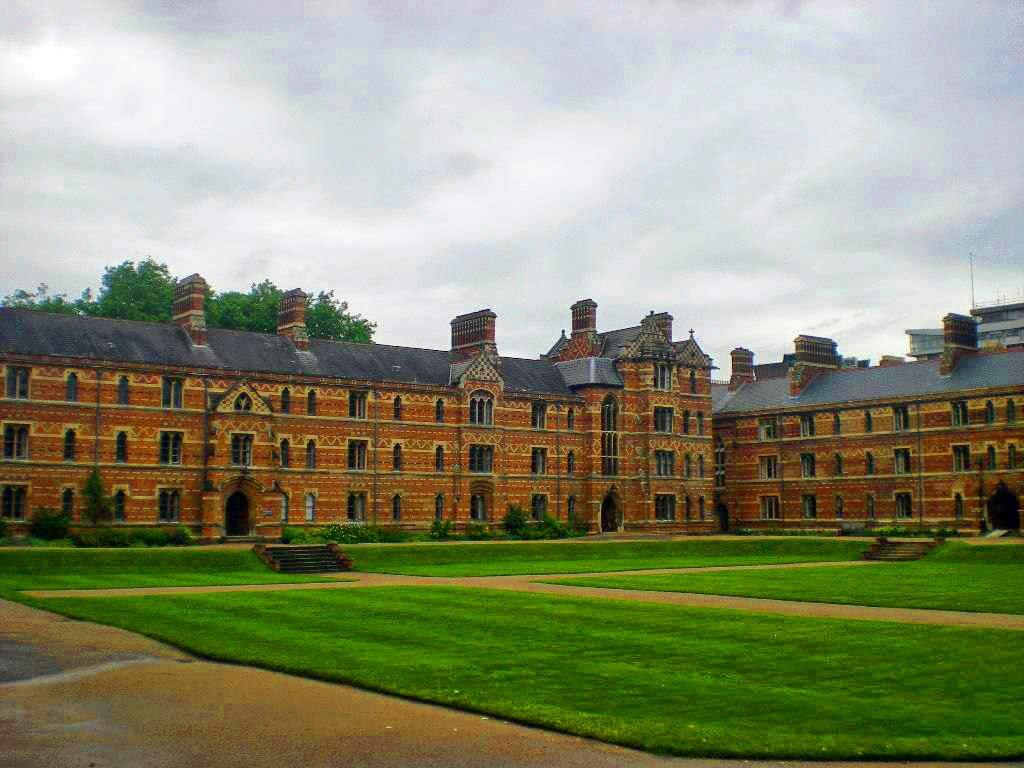
It all began in 2000 when our daughter went off to study Classics at Keble College, Oxford. I quickly fell in love with the history and traditions of the city and university when visiting her there, and all these years later was able to use many of her experiences for my heroine Felicity, who, not so coincidentally,  had also read Classics at Keble.


But in A Newly Crimsoned Reliquary Felicity doesn't start at the university. She's off to a convent to do a spot of translating for The Sisters of the Love of God in Fairacres, a suburb of Oxford. So that's where I began my research. The nuns welcomed me to enjoy their garden, worship in their chapel and tour their press. And I managed my time there without ever getting assaulted as Felicity was.


Since the ringing of muffled bells is an important through-line in this story I arranged to have a bell-ringing lesson from the Oxford University Society of Change Ringers— this also accomplished without anyone getting murdered, unlike Felicity's experience


I visited all the sites of Oxford's saints and martyrs which provide the historical background of this book, although I had to dig out my own facts without having Father Antony there to give me one of his vivid lectures.


All-in-all, even though I had a somewhat less exciting time than Felicity and Antony have in Oxford, it was a wonderful experience which I have loved reliving as I developed the plot and my characters at my computer and am thrilled to share with my readers.

What is your favorite place to write or read about?

Who will be the next victim of the murderer stalking the shadows of Oxford's hallowed shrines?

To learn more about Donna's books and see pictures of her research trips, go to her website or follow her on Facebook.

Wednesday, August 13, 2014

"Being There" in the Middle Ages


I have often said, undoubtedly even on ICFW before, that one of my goals as a writer is to give my readers a "you are there" experience, but that in order to do that I need to be there myself first. Not always so easy when one lives in 21st century Idaho and is writing about 14th century England.  This summer, however, offered me two exceptional opportunities for a hands-on Medieval experience.

First, in June, I was invited to speak at two conferences in England— which left a perfect chance to research the sites of my next book in the Monastery Murders series on the spot. For this series my amateur sleuths are required to find clues buried deep in the middle ages to solve contemporary murders. My next book  An All-Consuming Fire  focuses on the English Mystics Richard Rolle and the anonymous author of The Cloud of Unknowing, so my husband and I spent a week in Yorkshire visiting places associated with these devout men:

The Beck near Pickering where Richard Rolle first took up the ermitical life:


Pickering church with its marvelous medieval frescoes, "the poor man's Bible" where Rolle encountered his first patron:


Rievaulx Abbey, one of the great monastic centers of the Middle Ages:


Mount Grace, the Carthusian priory where a monk produced a glossed translation of  The Cloud of Unknowing in the 15th century:


And Ampleforth Abbey where I was allowed access to two early manuscripts of The Cloud of Unknowing:

I'm still trying to decipher what clues might be hidden in the doodles on the second volume.

All wonderful experiences to be on the spot where these things happened. But still, I was in the 21st century, not the 14th.  And then, since our son couldn't get off work, I was invited to join the Society for Creative Anachronism's annual experience of living in the Middle Ages as nanny to our almost-five-year-old grandson so our daughter-in-law could participate with her drama group.


In the persona of Sister Elswyth, a medieval nun, I cooked over an open fire with hand-forged utensils:


Walked the muddy roads to market, observing warriors off to battle:


And seeing how natural fabrics serve as wicks to mud after a rain (surely a nightmare for monks in white Cistercian robes):


Watched archers practice:


Joined in a Fool's Parade:


And experienced being there:


And now I get to have the fun of reliving it all as I translate my experiences through Felicity and Antony as they struggle to catch a murderer before their Christmastide wedding.

Donna Fletcher Crow is the author of 45 books, primarily historical novels and mysteries dealing with the history of British Christianity. Her most recent release in the Monastery Murders is A Newly Crimsoned Reliquary, set in Oxford with the Oxford Martyrs, John Wesley's Holy Club and the Oxford Movement as background of Felicity and Antony's adventures. To see all of Donna's books and photos from her research trips go to her website.

Tuesday, May 14, 2013

No Story Before Its Time

Some wine company used to advertise, "We will sell no wine before its time." Sometime stories are like that— one can tell no story before its time.

I had wanted to tell the story of Christianity in Wales for at least 20 years. After all, I told the story of Christian England in GLASTONBURY, of Scotland in THE FIELDS OF BANNOCKBURN, and of Northern Ireland in THE BANKS OF THE BOYNE. Wales had to come next, didn’t it? But publishers change, markets change, writers change. . .

In 2001 I researched the story of St. David spreading Christianity throughout his beloved land and the phenomenal accounts of the 1904 Welsh Revival that swept the coal mining villages of the Rhonda Valley for a nonfiction book I hoped to publish. But the time was not yet.

Then came The Monastery Murders and I had a whole new avenue to tell so many stories I had been longing to tell. And with AN UNHOLY COMMUNION, book 3 in the series, it was time to explore mystical Wales.

First, I revisited the scenes of the stories I would be telling— or rather, Father Antony, my resident church historian, would be telling. Then, because Felicity and Antony were in Wales to lead a youthwalk, I needed to experience a walking pilgrimage. So I joined a group walking the ancient pilgrimage way from London to Walsingham— fortunately, a considerably less mountainous route than that hiked by my fictional characters.
Wales, however, wasn’t the only new territory for Felicity to explore. Because one of the themes of this series is to explore the reality of good and evil and much of Felicity’s spiritual development comes from her exploration of new-to-her aspects of Christianity, AN UNHOLY COMMUNION deals with the reality of evil.

Wales is a land where there are many "thin places," as the Dean of St. David’s Cathedral said to me. It is a place where one can feel very close to God, indeed. And sometimes this same thinness can make way for forces from the other side.

This was part of the story I needed to tell— all based on careful research into experiences of deliverance ministers and those who deal with evil as part of their Christian ministry. Just as I don’t make up any of the history I recount in my novels, I wasn’t about to make up any encounters with evil. Rather, I transfered actual deliverance stories to my characters.

It’s a rather different story from others in my series, a very different story from one I would have told before. But AN UNHOLY COMMUNION was the story I needed to tell this time.


You can read more here: http://ning.it/11tcd4m

Donna Fletcher Crow is the author of 43 books, mostly novels of British history. The award-winning Glastonbury, A Novel of the Holy Grail, an epic covering 15 centuries of English history, is her best-known work. She is also the author of The Monastery Murders: A Very Private Grave, A Darkly Hidden Truth and An Unholy Communion as well as the Lord Danvers series of Victorian true-crime novels and the literary suspense series The Elizabeth & Richard Mysteries. Donna and her husband live in Boise, Idaho. They have 4 adult children and 11 grandchildren. She is an enthusiastic gardener.
To read more about all of Donna’s books and see pictures from her garden and research trips go to:
http://www.donnafletchercrow.com/ You can follow her on Facebook at:
http://ning.it/OHi0MY