There was going to be a great famine throughout all the world.... Then the disciples, each according to his ability, determined to send relief to the brethren dwelling in Judea. This they also did, and sent it to the elders by the hands of Barnabus and Saul (Acts 11:28-30).
The pictures of the massive earthquake and deadly tsunami that struck Japan last week kept us glued to the computer and TV screens , as we tried to imagine the horror and wrap our minds around the devastation. Our natural response was to want to help in any way we can--and well we should, as we nearly always do in the wake of some newsworthy crisis or disaster.
Jesus fed the hungry, healed the sick, and called sinners to repentance while He walked this earth; He has commissioned us--His followers, the Church--to continue that outreach until He returns to set things right at last. And so we must. I applaud all who have responded to the tragedy in Japan, in Haiti, in Australia, in New Orleans, and anywhere human need has torn at our heartstrings over the last few years. But we dare not forget that in addition to bringing physical healing and nourishment, Jesus came to offer forgiveness to those who would admit their need to receive it. And that is the first priority of the Church.
The verses above tell us that believers responded to a predicted famine by giving as they were able, but they did so by way of other believers. That's an important point. Though I have no problem with giving to secular relief funds, I prefer to support Christian organizations that provide not only food and water and other physical necessities, but can also provide the gift of eternal life by presenting the gospel of Jesus Christ. It is a gift that all people, particularly the Japanese right now, need desperately. The percentage of Japanese who are truly born-again believers is estimated to be as low as 1 percent of the population. Whether that's a true figure or not, we do know that the percentage is extremely low. As horrible as the physical destruction is in Japan, the most pressing need is for hearts to be open to the Truth of Jesus Christ.
As we respond to this crisis with physical and material contributions, may we not forget the crucial, eternal-life crisis that faces each one of us--the need to receive Jesus as Savior BEFORE we take our last breath. None of us knows when that will be, as the recent earthquake in Japan so vividly illustrates. Let's pray with passion and diligence for a great revival to sweep over Japan, as well as around the world, as the Day of the Lord draws ever closer.

Showing posts with label earthquake. Show all posts
Showing posts with label earthquake. Show all posts
Tuesday, March 22, 2011


Thursday, April 8, 2010
TSUNAMI--By Christine Lindsay
 My posting last month was supposed to be my last one on my trip to India. Alas, I have one more story I must share.
Life isn’t easy. Even for people who are closely yoked to Christ, life isn’t easy.
In each and every group of people I belong to, the pain or confusion of life often washes over us. If it’s not us, it’s someone else whose struggles feel like a riptide has snatched them from the safe shore and is carrying them off.
The 2004 tsunami hit a lot of coastlines, India being one. The earthquake that started that killing wave had the energy of 23,000 atomic bombs. The wave—insignificant at first—roared out with centrifugal force at the speed of a jet plane until it escalated into something monstrous when it neared land. People, human beings, didn’t have a chance.
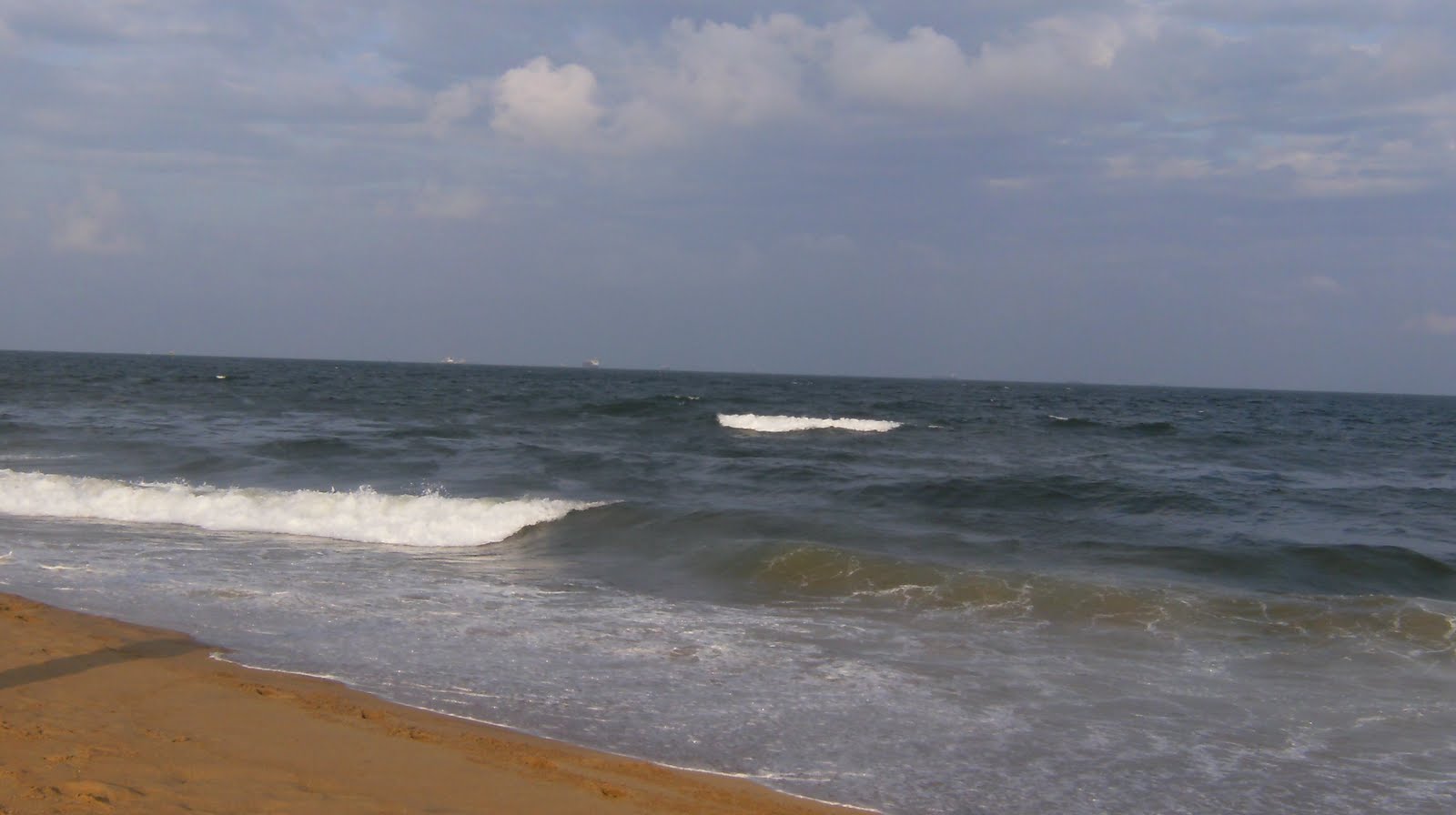
Five years after the tsunami some of our visiting team sat out on a hotel veranda overlooking the Bay of Bengal. The sun shone. Soft breezes played like silk against our skin. The scent of tropical flowers teased our senses. Part of our team was involved in a meeting. They had bibles open on their laps, and at times they bowed together in prayer. Anyone walking in the hotel courtyard below, or standing on another veranda could see them.
An Indian lady climbed the stairs to the team’s veranda and asked to speak to them. She could see that they were Christians and wanted to tell her story.
She had seen firsthand what the tsunami did that December day. All her life she had been a Catholic Christian, but when she saw the devastation and the staggering numbers of the dead, she raised her eyes to heaven and asked what we all ask. Why?
There had to be answers, yet the local clergy had none. Nor did her husband have answers to this horrible question of devastation and loss.
Just after the catastrophe, this lady had picked up her Bible and began to read. She began to pour out her heart in honest prayer. Slowly, she realized God did not answer her question as to why He allowed the disaster. What she did find was a God calling her to a deeper relationship with Him. All her life, she had thought she knew the One who hung on that cross for her sins. But in reading her bible, for the first time she realized it was a personal letter to her from God. A lot of people died the day of the tsunami, but today God was comforting her with His own presence.
Everyone I know has some kind of pain in their lives. We are either hurting with sickness or someone we love is. We struggle with the loss of a loved one or the lack of a loved one. We often don’t know which road to take in life. God seems to call us in a certain direction, we take a step of faith . . . and yet the expected outcome falls far short. The visualization of the original dream dies.
Is God in any of this?
Take comfort in these selected thoughts. “Then the Lord answered Job out of the whirlwind . . . "Where were you when I laid the foundation of the earth? . . . Who enclosed the sea with doors? When bursting forth, it went out from the womb. . . . I placed boundaries on it . . . I said, 'Thus far you shall come, but no farther. Here shall your waves stop'. He makes the depths boil like a pot; He makes the sea like a jar of ointment.
Behind Him he makes a wake to shine.”

If you would like to read more by Christine Lindsay, check out her blogsite, www.christinelindsay.com
Saturday, March 6, 2010
Tragedy and Fiction -LeAnne Hardy

For 45 seconds the earth shakes, half a city collapses, and 200,000 people die. If it came out of Hollywood, we would say it was one of those ridiculous Apocalyptic movies with no plot but great special effects—except that this is real. As real as a huge wave of water overwhelming coastal communities and sweeping away life as they knew it. As real as airplanes flying into buildings that collapse on thousands. Even as I write we are following news of another earthquake in Chile. Thanks to the Internet and satellite TV, these images flash around the world instantly. They make a dramatic background for fiction.
But do we trivialize when we base fiction on such realities?
I have been reading Scared by Tom Davis, a novel about HIV in Swaziland that I first heard about on this blog. It’s strong stuff. The opening scene describes a 1998 raid by rebels on a town in Congo (formerly Zaire) where they murder the men, rape and kill the women, and pile the bodies to burn, desecrating them before they do. Gruesome stuff, but, as a foreword from the publishers warns, this is reality. Scared also describes scenes of child rape and near-rape. I have worked with children affected by HIV in Africa, and I assure you that Davis describes nothing that is not true to life.
We often choose Christian fiction because we are sick of secular writers using gratuitous violence and explicit sex to sell books. We want to be protected from all that. But is there such a thing as being too protected—so protected that we lose our passion for justice and righteousness, that we forget how evil sin is—because we have glossed over unpleasant realities?
I have been following The Livesay [Haiti] Weblog, the account of Troy and Tara Livesay, missionaries in Haiti. (One of his beautiful photos opens this blog.) Tara ran the Disney Marathon with my daughter two days before the earth shook although the she and my daughter never met among the thousands running through the Magic Kingdom and around the lake at Epcot. I have never met her family. I knew nothing of their ministry before a friend passed on the link on Facebook. But for me, reading their blog puts humanity on the things I see on TV and places my God firmly in the midst. As a parent, one of the most poignant entries was when they took their six younger children (three of Haitian nationality) to the American Embassy to send them off with strangers on a cargo plane to the U.S. I felt Tara’s relief when they got the message that the children were safe with family in New Jersey. The Livesays have now gone to Texas for a time of healing with their children, but the blog continues to give me specifics to pray that will aid not just the general population of the country, but specific people who can be touched with the love of God.
Fiction can make us identify with realistic characters and so empathize with a situation beyond our comprehension. The Livesay’s blog is not fiction. It is current events. Is it appropriate to use these huge tragedies in our fiction, or are we guilty of exploiting the suffering of others to sell books? What limitations or qualifications would you put on fiction that uses tragedies like the Haiti earthquake as background? Or are non-fiction accounts the only appropriate way to convey what happened? Comment below and tell us what you think.
------

Subscribe to:
Posts (Atom)