Showing posts with label Glastonbury. Show all posts

Wednesday, February 7, 2018

Wandering Wednesday: Glastonbury—Holiest Earth in England


By Donna Fletcher Crow @DonnaFletcherCr

 I don’t remember where I first read those above words, but I’ll never forget the impact they made on me. As a devout Anglophile who prays daily for spiritual renewal in England, I knew Glastonbury would be an important place to me.

 And then the wonderful “Chariots of Fire” movie came out, popularizing “Jerusalem” also known as “The Glastonbury Hymn” from the William Blake poem:

        And did those feet in ancient time
        Walk upon England’s mountains green:
        And was the holy Lamb of God,
        On England’s pleasant pastures seen!

 I wasn’t sure what it meant, but somehow it gripped me.

 My first opportunity to walk upon Glastonbury’s green mountains came in 1985 when I was in the west of England with my then editor researching what has become my Where There is Love series. I included a side trip to Glastonbury in our itinerary.


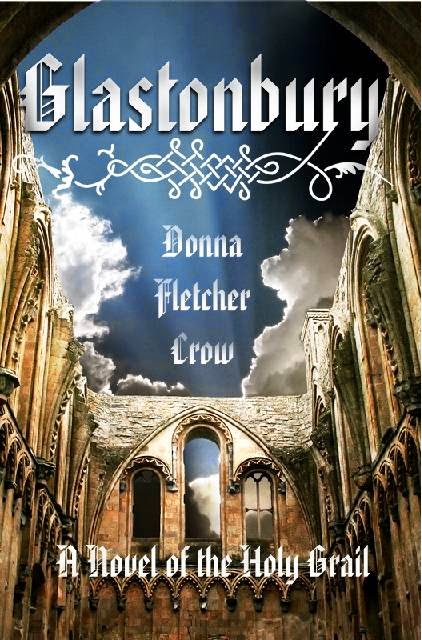
My epic novel Glastonbury, The Novel of Christian England, was born as we were leaving when my editor read aloud from a pamphlet she had picked up at a bookstall:


“‘Did our Lord ever come to Glastonbury as a lad? The story lingers not only here, but elsewhere as well. The tradition is that our Lord, entrusted to the care of his Uncle Joseph of Arimathea by his mother Mary, daughter of Joseph’s elder brother, accompanied Joseph on one of his expeditions to Britain to seek metals for his flourishing trading company.’”

 I gave a shout of laughter. “What? That’s crazy!”

 But Carole kept on. “No, wait, this is interesting. It says, ‘Perhaps there is some truth in the tradition which still lingers in Somerset that St. Joseph of Arimathea came to Britain first as a metal merchant seeking tin from the Scilly Isles and Cornwall, and lead, copper, and other metals from the hills of Somerset, and that our Lord Himself came with him as a boy. The tradition is so startling that the first impulse is to reject it summarily as ridiculous.’”

“It sure is,” I said.

 But Carole kept on. “‘Amongst the old tin-workers, who always observed a certain mystery in their rites, there was regularly a moment when they interrupted their work to sing a quaint song beginning, “Joseph was in the tin trade.”

“‘If this is so, it is quite natural to believe that after the crucifixion, when the church was dispersing under persecution and in answer to the Great Commission, Joseph and his party would come to this land with which Joseph was already acquainted.

 “‘Among the cherished possessions the little band brought with them was the cup used at the Last Supper in Joseph of Arimathea’s Jerusalem residence, an ordinary cup in everyday use in his house, now become a sacred treasure, since with this cup of olivewood our Lord had inaugurated the new covenant.’”

Now my imagination was captured as I mused, “What a novel that would make!”


Donna Fletcher Crow is the author of some 40 novels, mostly dealing with British Christian History. The Arthurian epic Glastonbury is her best-known work. She currently authors 3 mystery series:The Monastery Murders,The Elizabeth and Richard Literary Suspense Series, and Lord Danvers Investigates, Victorian true-crime novels. You can see more on her website.

Monday, January 19, 2015

Making Readers Think

Why do you write? A question often asked of writers. My answers are usually along the lines of: To tell a story, to give my readers an experience, to keep the stories of ancient saints from being lost. They must be reasonable answers— they've kept me at it for almost 35 years.

But one answer that had never occurred to me was "to make my readers think." Perhaps it sounded too didactic— too English teacherish (which I was).

Then a reader calling herself Flamingo Girl left this review for my Glastonbury, A Novel of the Holy Grail on Amazon: "I'm a big fan of historical fiction and this book delivers. It's a beautifully written book about the spread of Christianity through England focused on Glastonbury (obviously, lol). Despite the book's religious focus it is never preachy and the religious beliefs/quotes feel very organic to the story. You quickly come to care about each character and I found each story to be very inspiring. None of the characters are perfect but all come to God in their own way. As a spiritual but non religious person this book actually made me examine my own faith and deepened my own feelings about the Divine. I wasn't expecting that at all as I tend to be a bit jaded. I really liked this book and will reread it again in future. If you like historical fiction, Christian fiction, or just meaty well written books you can not go wrong with this book."

Wow! Of course, any 5 star review is a wow, but "never preachy. . .As a spiritual but non religious person this book actually made me examine my own faith and deepened my own feelings about the Divine" was more than I could have thought to ask for.

Of course, this isn't down to my goals— it's the work of the Holy Spirit, for which one can only say a heartfelt, "Thank you," but I find this review from an unknown reader has made me examine my own goals. It's also a lesson to me to be so very careful about what I write because the written word can be a powerful tool.

Now it's your turn: Why do you write?

Ebook
Print

Donna Fletcher Crow, Novelist of British History, is the author of 43 books. She currently writes three mystery series: The Monastery Murders,The Elizabeth and Richard literary suspense series and the Lord Danvers Victorian true-crime novels.

Thursday, January 14, 2010

Homework, Fieldwork and the Fun of Setting Research - LeAnne Hardy

On Monday Cathy wrote about her novel manuscript set in Viet Nam.  One of the fun parts of writing international fiction is the travel. My first two books were set in places I knew well because I had lived there. When I wrote Glastonbury Tor (part historical fiction, part fantasy of the Holy Grail) I had lived in England, but not in the sixteenth century and not in Somerset where Glastonbury Abbey was located. I needed a visit to soak up the details that would create the atmosphere I wanted. Here are some things I learned about researching my setting.

Do your homework.
The public library provided me with more than thirty books about medieval and Elizabethan life in England, the monasteries, and the Dissolution under King Henry VIII. I was surprised at how many books I found specifically about the history and geography of Glastonbury. (Libraries are the best thing about living in a developed country—that and fast internet.) Descriptions stimulated my imagination and filled my mind with elements for my story. Besides all the notes on facts and plot ideas, I soon had a list of places I wanted to see in person.


Keep a journal. 
This is not only what we writers to do, it is also a good way to convince the IRS that your travel was a business expense. I found that I alternated scrawls of information with pages of dialog and description as they came together in my head at the site. It didn’t hurt that my hosts loaned me a bicycle to take the canal path into town through a nature reserve. The bird hide with a view of the Tor (Celtic for ‘hill’) was a perfect place to gather my thoughts and think about what my characters would do with what I had seen that day. One evening I came upon the starlings roosting in the reeds of one of the bogs that still dot the Vale of Avalon. That experience became a key romantic scene in the book. Fog creeping out of the bog across the bike path found its way into a darker scene. The day I climbed the Tor in the rain, I rushed home to the farmhouse where I was staying and drafted the scene when Colin climbs the Tor, visiting the Stations of the Cross in an effort to purge his soul. Of course, it is raining in that scene.

Use a digital camera to take notes. 
After all, a picture is worth a thousand words. The photograph of the monastery wall edging High Street reminds me of its height and the crenulations along the top. I take pictures of signs  to remind me of where the next pictures were taken or to be studied for information later (being careful not to position the flash so it produces a glare that makes the sign unreadable.) One of my numerous shots of the photogenic Tor became the basis for the book’s cover design.

Buy a geological survey map of the area. .
These are sold in shops for hikers. Mine not only kept me from getting lost in my rambles, but I also spread it on the floor of my study back home to plan the approach of King Henry’s men and Colin’s route in search of the stolen Grail.


Local people are great resources
When I visited Glastonbury, I stayed with a family I found by contacting a local church and explaining who I was and what I wanted to do. I offered to pay for hospitality--something that was hard to convince my new friends to accept in the end. They filled my ears with local data and later checked my dialog for authenticity. When I went to Wales to research a sequel (my current work-in-progress) I took advantage of the local Rambler’s Associations. These groups organize country walks. When my fellow walkers found out why I was there, they were eager to suggest other locations I should visit. One hike proved to be shorter than expected and half the group accompanied me to a near-by waterfall they thought I should see. I would never have found the location on my own, but it was the perfect inspiration for several key scenes.

What books have you read whose setting most interested you? Is there a dream setting you would like to visit?

______
LeAnne Hardy has lived in six countries on four continents, sipped cream tea in Oxfordshire, eaten stewed goat at a Mozambican wedding, slid down rocks in a Mato Grosso river and shopped at Mall of America. Her books for young people come out of her cross-cultural experiences and her passion to use story to convey spiritual truths in a form that will impact lives. Visit her at www.leannehardy.net