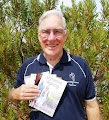
Stephanie Landsem is with us today. She lives in snowy
Minnesota, but she writes about people who met Jesus in first-century
Palestine. Read to the end of this blog to find out how you can win a free e-copy of her latest novel,
The Thief, released just last week. Here’s the description:
Nissa is a Jewish woman
with a sharp tongue and no hope of marriage. Abandoned by the God she once
loved, her only recourse is to depend upon Mouse, the best thief in Jerusalem,
to keep her blind brother, Cedron, fed and the landlord satisfied.
Longinus is a Roman centurion
haunted by death and failure and desperate to escape the accursed Judean
province. Accepting a wager that will get him away from the aggravating Jews
and their threats of revolt, he sets out to catch the thieves harassing the
marketplace.
LeAnne Hardy: I loved
this book. Part of the tension for me was the knowledge that two thieves were
crucified with Jesus. Which of the characters we are getting to know (and in
some cases love) will die at Golgotha? The author sticks closely to what we
know from Scripture even as she expands on events with her fictional
characters.
Thank you for being
with us today, Stephanie. Nissa in The Thief
pretends to be a boy. Mara in The Well, the first book in this Living Waters series, is also an outsider. Do
you see yourself as a rule breaker? What draws you to women who are?
Stephanie Landsem: When I read the Bible, I see that Jesus
was drawn to outsiders. The Samaritan woman, the woman caught in adultery, the
sick and diseased. He didn’t come to preach to the well, but to heal the sick.
Perhaps that’s why my heroines are women that are desperate or on the fringes
of society, to show that Jesus is present to them, no matter what their past
sins.
LH: The crucifixion
scene was very moving. How hard was that to write?
SL: It was extremely difficult. I remember sitting down and
thinking “Why did I think I could do this?”
I read many accounts, spent a lot of time in prayer, and went through a
box of tissues before it was done.
LH: I had to reach for
the tissues reading it! Near the beginning of The Thief, Nissa’s brother Cedron is healed of his blindness in a fictionalized
account of John 9. Later he is beaten and left with a limp. I found myself
wondering why Jesus didn’t come back and heal the limp. What did you want to
show us by Cedron being healed of one thing, but left to suffer another?
SH: As in The Well,
I explored the question of what happens after
an encounter with Jesus, the Incarnation. Once Cedron believed in Jesus, would
his life be magically better and perfect? Or would he have even more challenges
to face and how would he face them? We’ve seen that believing in Jesus isn’t a
recipe for a perfect life on earth, but it will get us to the perfect life with
him in eternity.
LH: Cedron is a
Zealot. He has militaristic expectations of the Messiah. I found myself
wondering about expectations we have of the Messiah today, like why doesn’t
everybody get healed? What other expectations do you think we have of Jesus
that he may, or may not fulfill? (I’d love to see readers chime in on this in
the comments, too.)
SH: That’s a good question. Cedron had a simplistic view of
Jesus based on what was happening in Jerusalem at that time. But God’s plan
isn’t simple at all, as we know, and we can’t think that we ‘know best’ what he
should do. I think it’s a mistake that’s easy to make when we’re facing
personal hardship.
LH: Your books are biblical
fiction. Do you start first with a Bible story you are drawn to or with a
character?
SH: I start with the character and go from there. I like to
wonder about the parts of their lives that aren’t written in the biblical
account. Who were their families? How did they fit in their communities? And
mostly, what happened after they encountered Jesus?
LH: Your books are
full of historical details that bring the place and period to life. What are
some of the techniques you have found most effective for historical research?
SH: I start with the Bible, then often read commentary and devotionals about that passage to get many interpretations of it. Then I order many books from the Minnesota Library system and get an overview by paging through them. I find they have all sorts of resources from general history to compilations of papers published by historians, archeologists, and theologians. Many books have maps and sketches that are very helpful - such as when I was researching ancient Jerusalem for The Thief. It's really a treasure trove! After I get the majority of the research done and am writing the story, I use the internet when I come up against a specific question. For The Thief I needed to know what a first century Roman lock and key looked like and found it instantly on Google. For The Tomb, my WIP, I often go to JewishEncyclopia.com for questions on common Jewish practices.
LH: I’m sure you find
much more interesting material than you end up including in the book. Do you
have any guidelines to offer fellow-writers about when to include a research
detail and when to leave it out?
SH: That’s a hard one. I hate leaving anything out. I
usually know when I hit upon an historical detail that stands out as very
different from present day. When I say to myself “Wow, that’s fascinating,”
then I know it must be included.
LH: The Thief
stands on its own, but it also includes characters we met in your first book, The Well. What was the thinking behind
that?
SH: I thought it would be fun to have a minor character from
The Well make an appearance in The Thief, and Longinus, the Roman
soldier, seemed like a good choice given the setting of Jerusalem. But as I
started writing him, he became a major character and one of my favorite ones
that I’ve written so far!
LH: It isn’t often
that a novel leads me into worship, but this one did. The scene at the foot of
the cross shows Jesus full of power even as he submits to death. Each character
brings his or her own story to the cross and there finds the mercy and
forgiveness Jesus offers us today. The Thief will be wonderful reading for the Lenten season.
Comment on this blog by Friday, March 14, to enter a drawing for a free e-book of The Thief
. I would love to hear your comments on our expectations of the Messiah, but that is not required. Don't forget to leave your e-mail address encoded to foil phishers. Odds of winning depend on the number of entries. Void where prohibited by law.
Add pop over to Stephanie's blog to enter not just to win a free book, but a Kindle fire for reading it!
Thank you, Stephanie, for being with us today.
SL: Thank you for having me. It has been a pleasure to answer your questions.
___
LeAnne Hardy enjoys a critique group with the talented Stephanie Landsem. LeAnne hasn't published any biblical fiction to date, but her stories reflects her faith, her passion for storytelling that stretches the mind, and the cultures she has lived in. Learn more at www.leannehardy.net .